
The AI Revolution: What It Means for Developers
Artificial intelligence has gone from a niche research topic to something woven into the tools we use every day. Your phone predicts your next word, your code editor finishes your functions, and a chatbot can draft an email in seconds. This shift is often called the "AI revolution"—but behind the buzzword is a real, understandable change in how software gets built and used.
This article cuts through the hype and looks at what's actually happening, why it happened now, and what it means if you write code for a living.
What Do We Mean by the "AI Revolution"?
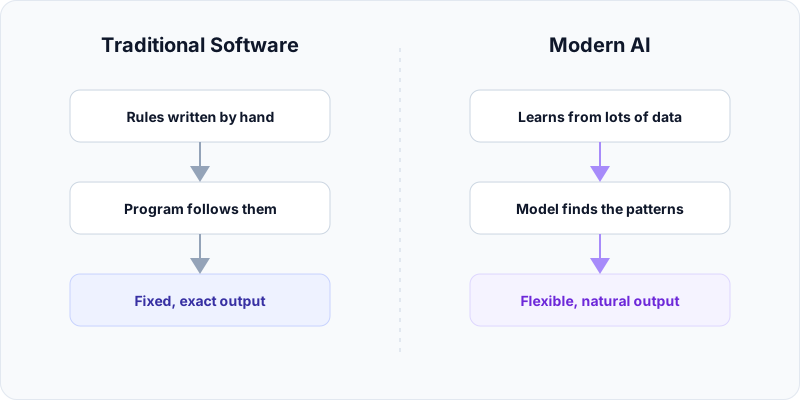
For most of computing history, software did exactly what it was told. A developer wrote explicit rules, and the program followed them—no more, no less.
Modern AI flips that idea. Instead of coding every rule by hand, we train models on large amounts of data and let them learn patterns on their own. The result is software that can write, summarize, translate, generate images, and answer questions in natural language.
The "revolution" isn't that AI suddenly exists—it's that AI became good enough and cheap enough to put into ordinary products. What used to require a team of specialists is now available through a simple API call.
Why Now?
The core ideas behind today's AI aren't brand new. Neural networks have been around for decades. So why did everything accelerate in the last few years?
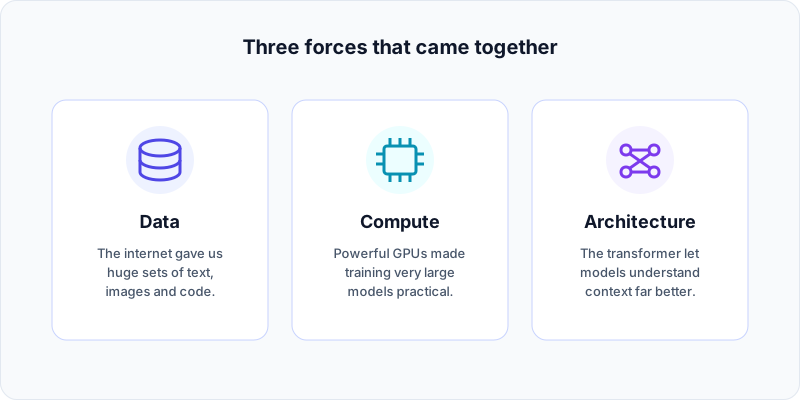
Three things came together:
- Data. The internet gave us enormous datasets—text, images, and code—to learn from.
- Compute. Powerful GPUs made it practical to train very large models.
- Better architectures. A design called the transformer let models understand context far better than anything before it. This is the "T" in tools like GPT.
None of these alone was enough. Together, they crossed a threshold where the results stopped feeling like a demo and started feeling genuinely useful.
Where You Already See It
The AI revolution isn't a future prediction—it's already in your daily workflow:
- Coding assistants that autocomplete lines, explain unfamiliar code, and suggest fixes.
- Search and support tools that answer questions in plain language instead of returning ten blue links.
- Content tools that draft, rewrite, and summarize text.
- Design and media tools that generate images, audio, and video from a description.
If you've used any of these, you've already participated in the revolution.
What It Means for Developers
It's easy to read headlines and worry that AI will replace programmers. A more accurate view: AI changes what programming looks like, not whether it's needed.
Here's how the day-to-day shifts:
1. Less boilerplate, more design
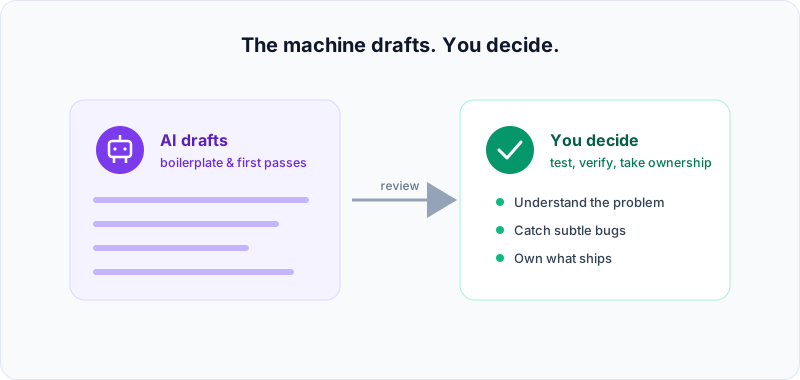
AI is great at the repetitive parts—writing a config file, scaffolding a component, converting data between formats. That frees you to spend more time on the harder, more valuable work: understanding the problem, designing the system, and making good trade-offs.
2. A new skill: working with models
Knowing how to phrase a request, give the model the right context, and verify its output is becoming a real skill. It won't replace understanding your codebase—but it will multiply how fast you move through it.
3. Judgment matters more, not less
AI is confident even when it's wrong. It can produce code that looks correct but has subtle bugs or security flaws. The developer's job increasingly becomes reviewing, testing, and taking responsibility for what ships. The machine drafts; you decide.
A Healthy Dose of Skepticism
It's worth staying grounded. Today's AI has real limits:
- It can make things up (often called "hallucination") and state them convincingly.
- It reflects biases present in its training data.
- It doesn't truly understand the way a person does—it predicts likely patterns.
- It raises open questions about privacy, copyright, and jobs that society is still working through.
Being excited about the technology and being honest about its flaws aren't in conflict. The best engineers do both.
How to Get Started
You don't need a PhD to be part of this. A practical path looks like:
- Use the tools. Add an AI assistant to your editor and notice where it helps and where it fails.
- Learn the basics. Understand what a model is, what "tokens" are, and why context matters.
- Build something small. Wire up an API to summarize text or answer questions over your own notes. You'll learn more in a weekend project than in a month of reading.
- Stay critical. Always verify AI output before trusting it in production.
Final Thoughts
The AI revolution isn't about robots taking over—it's about a powerful new tool becoming widely available almost overnight. Like the arrival of the internet or the smartphone, it reshapes what's possible and raises the bar for what's expected.
For developers, the opportunity is clear: those who learn to work with AI—thoughtfully, skeptically, and creatively—will build things faster and better than ever before. The rules of software are being rewritten. It's a good time to be someone who writes them.